Season of the Witch-hazel

We were very excited at the Nature Center last week to discover a beautiful Witch-hazel (Hamemelis virginiana) — in full bloom!

It was “discovered” when Guy Pardee of Suburban Natives, LLC freed it from a thicket of invasive shrubs and vines that had hidden it from view. Guy has been working for the past few years removing invasive plants on our grounds. Since restoring native plant life on our 33-acre preserve is one of our top priorities, it is especially gratifying to find a wonderful native tree right at its peak.
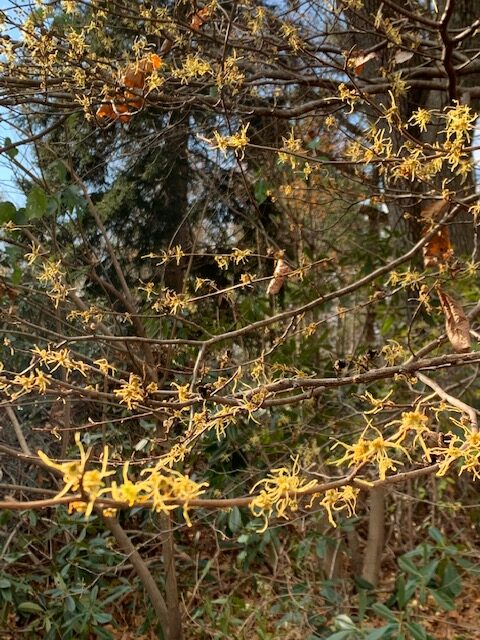
Witch-hazel blooming on November 29

Witch-hazel is a fascinating plant. It’s a multi-trunked shrub or small tree that evolved as an understory plant in the forests of the Northeast. You might not notice it at all in the spring or summer when it modestly sits under bigger trees in part shade. But in early winter, when all the leaves are down and most plants are going to sleep, Witch-hazel starts blooming. Its flowers are fragrant, and bright yellow with tiny streamers reaching out in all directions.

The leaves, bark, and twigs of Witch-hazel contain tannins and flavonoids that Native Americans used for centuries to treat skin ailments. European colonists soon adopted the practice, and today Witch-hazel is one of the few plants the Food and Drug Administration has approved for use in over-the-counter products. Many cosmetics companies use Witch-hazel in toners, diaper rash remedies, acne treatments, pore reducers, and after-shaves.
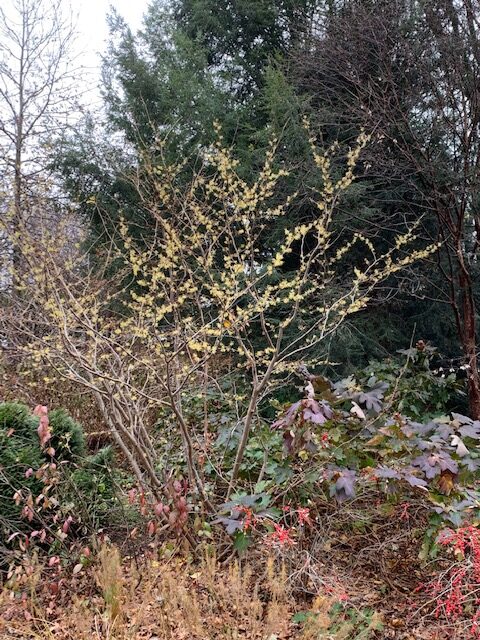
Blooming Witch-hazel stands out against an evergreen background

A more questionable early use of Witch-hazel was the practice of using forked branches as dowsing or divining rods to search for underground water. A “water witch” would hold the forked end of a Witch-hazel branch and walk until the flexible tip supposedly dipped when underground water was detected. Dowsing with Witch-hazel branches for well-digging was a common practice right into the 20th century.

The real mystery of this plant still isn’t settled. Why does Witch-hazel start blooming in winter when pollinators are already hibernating? And what insect does pollinate the flowers? Some researchers have pointed to a moth species that survives freezing temperatures by shivering so hard that its body warms above surrounding air temperature. Others have suggested that a small and very late-acting bee is the pollinator. Still others have theorized that swarms of tiny gnats do the job. More research is required.

But the coolest thing about this fascinating plant? Because of its strangely late pollination, there isn’t time for the fruit to ripen in the same year the flowers open. It takes the whole next summer for the seeds to slowly ripen in their pod. Then, just as the flowers start blooming in the freezing cold, the pod explodes throwing the ripe seeds 10 to 20 feet away, where hopefully they will rest until spring weather is warm enough for germination.
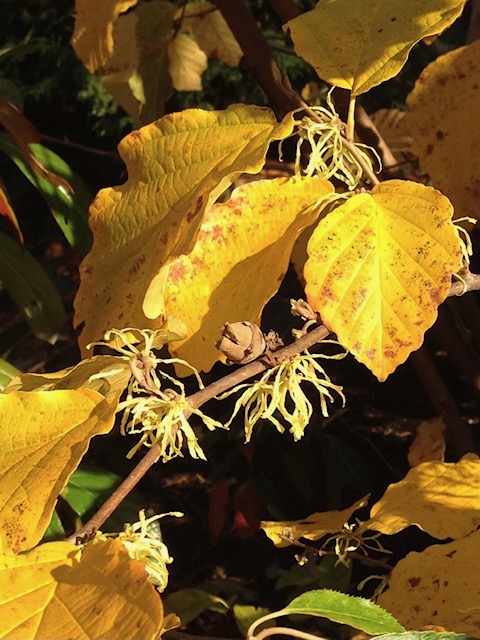
Seed pod almost ready to pop

Lately, we’ve seen nurseries offering non-native hybrids of Witch-hazel for sale. These varieties with orange or red flowers are recent introductions of hybridized Asian species, so their value to our native wildlife and potential for invasiveness are unknown. Our view is that it’s always safer to go with species that evolved in our region.

Hamemelis virginiana, our native Witch-hazel, is a garden-worthy plant that brings late-season interest to suburban landscapes. Try it against a background of evergreens in a partly shaded area. On a cold winter’s day, you won’t be sorry.
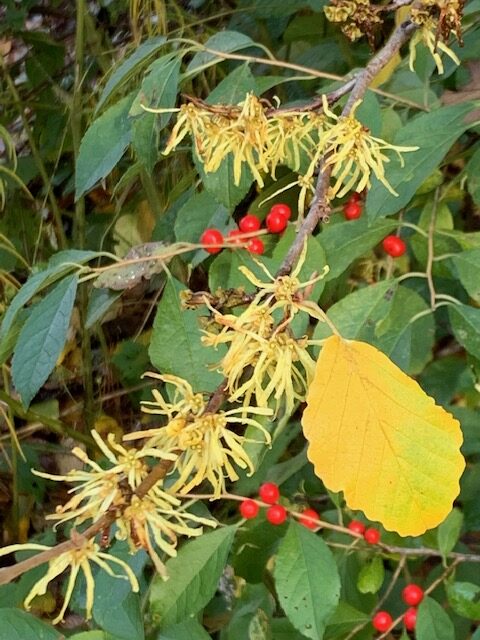
Native Witch hazel brings winter interest to the garden

This blog is authored weekly by Cathy Ludden, local expert and advocate for native plants; and Board Member, Greenburgh Nature Center. Follow Cathy on Instagram for more photos and gardening tips @cathyludden.

From Ho-hum to Home Sweet Home

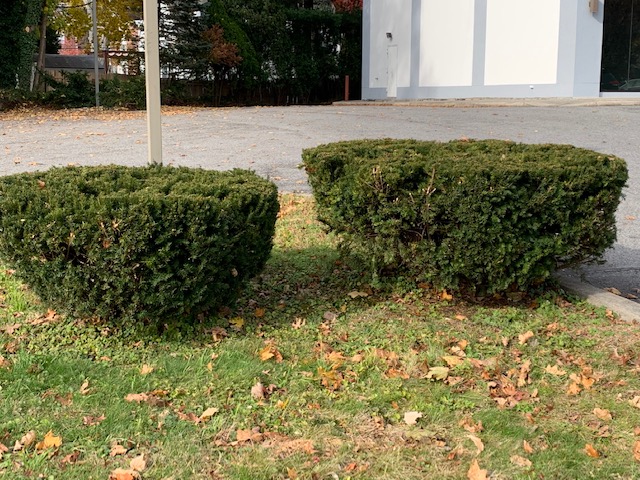
Does this planting “spark joy”?

People call these ornamental shrubs. But are they? Ornamental, really?

All around us we see the same limited palette of non-native, often dangerously invasive, and dull landscape choices. In pursuit of the aesthetic of “neat and tidy,” these shrubs are often hacked into unnatural shapes that do little to inspire or attract. Most of these plants offer less than two weeks of landscape interest (looking at you, forsythia and burning bush) and just occupy space the rest of the year. 

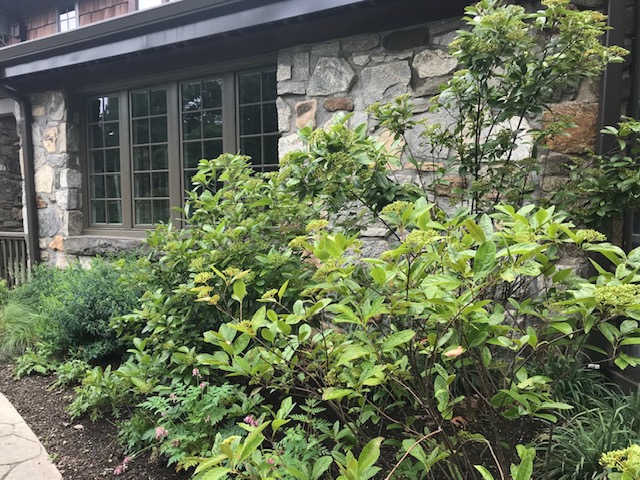
Two years ago, when we re-designed the foundation plantings around the Manor House at the Nature Center, we included under-used native shrubs that can beautify and diversify typical suburban plantings while providing necessary food and shelter for pollinators and birds. These are plants that look good while doing good.

A variety of all-native plants in our foundation landscape design

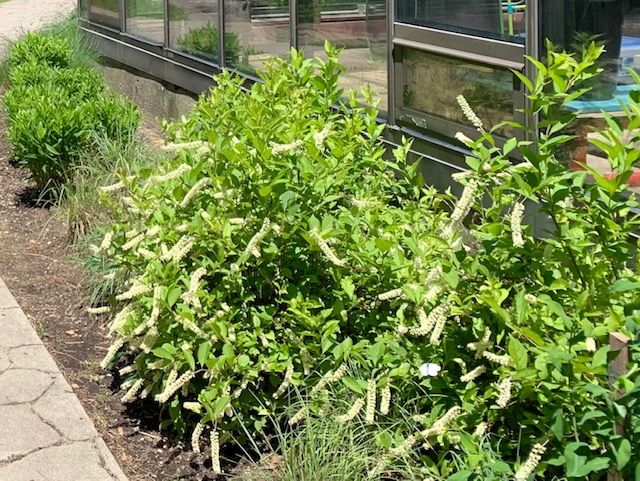
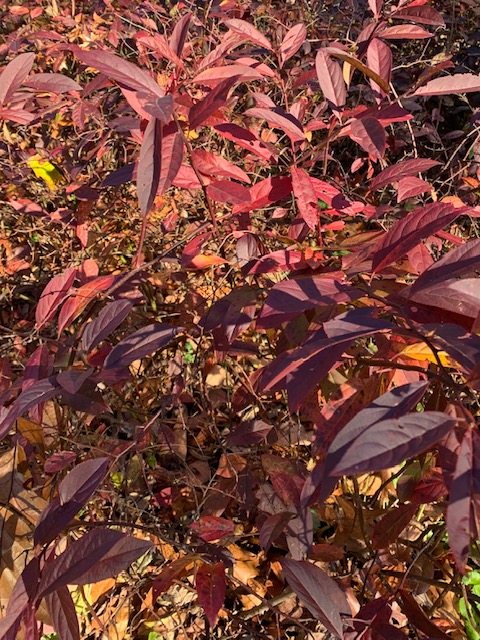
Under windows, or anywhere you need shrubs that stay fairly low, consider Itea virginiana (Virginia sweetspire). Itea blooms with delicate, but showy, white flowers in spring, attracting lots of butterflies. It has lush green leaves on arching stems all summer and rarely needs pruning. In fall, the leaves turn multiple shades of purple and red and hang on until the very end of the season. Itea will tolerate a half-day of shade, but its fall color is best in full sun.

Itea in spring
Itea in its fall glory

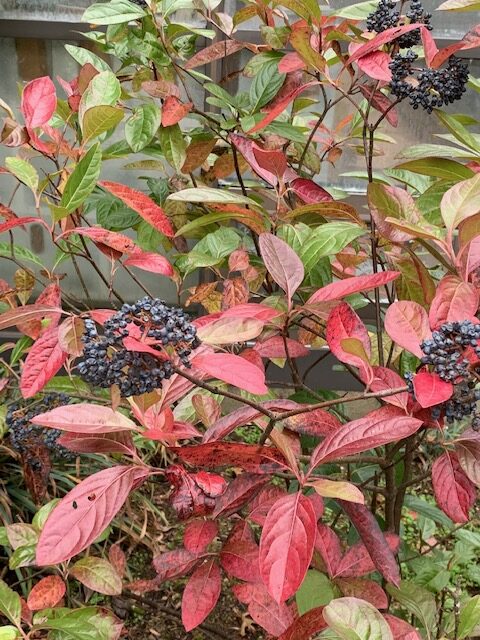
In a spot where you can use more height, try the magnificent native Viburnam nudum, also called Witherod or Possum Haw. This shrub attracts butterflies in spring with big fans of white blossoms. Its leaves are shiny and deep green. Then, in late summer, it produces berries in multiple colors that ripen into raisin-like fruits birds love. And for its last act before winter, the shiny leaves of Witherod Viburnum turn fall colors that put burning bush to shame.

Viburnam nudum gracefully grows 6 to 12 feet tall
Late summer berries will ripen from white to pink to blue
In October, the leaves turn flame red

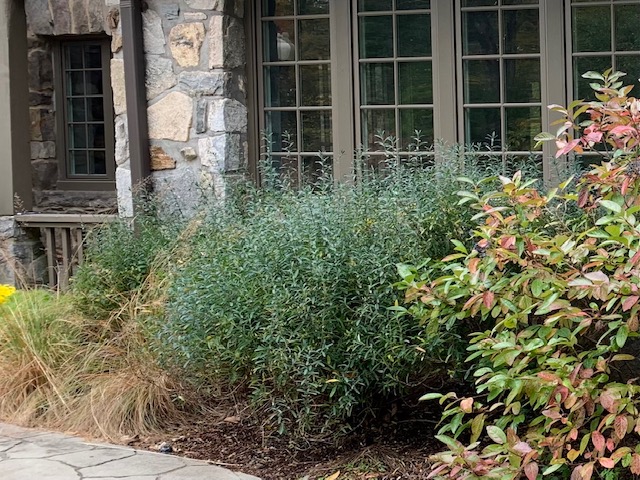
For mid-summer razzle dazzle, you can’t beat Shrubby St. John’s wort (Hypericum prolificum). This shrub is a great foundation plant with a naturally rounded shape and airy grey-green leaves on warm grey stems. Its fall color is mostly yellow, but it holds its leaves until very late in the season. It is one of the first plants to leaf out in the spring, so it looks great all year. 

Shrubby St. John’s wort near the Manor House entrance

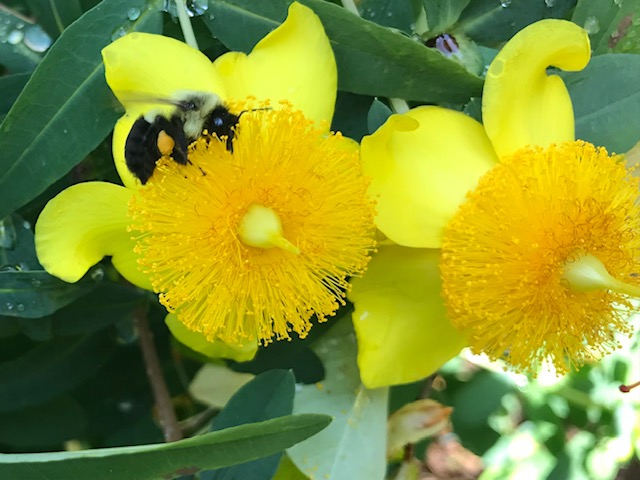
But its real star power shines in mid-to-late summer when it produces loads of bright yellow powder-puff flowers for at least a month. The flowers have no nectar, but are loaded with pollen. Bumblebees nuzzle into the flowers making all of the little stamens tremble and vibrate. 

Summer show with dazzling flowers

But you don’t have to worry about the bumblebees stinging – they are so obsessed with collecting pollen, they don’t notice you at all. It’s fun to watch them, and you can almost hear the shrub buzz as you walk by.

Bumblebee busy collecting pollen

Foundation plantings should be interesting, diverse, and useful to the ecology. If we can have multiple-season interest with native shrubs, why limit ourselves to the same old/same old “ornamental” plants we see too often?

This blog is authored weekly by Cathy Ludden, local expert and advocate for native plants; and Board Member, Greenburgh Nature Center. Follow Cathy on Instagram for more photos and gardening tips @cathyludden.

Oh Fother, Where Art Thou?

Specifically, oh Fothergilla gardenii, where art thou? And where all the other really interesting native shrubs? 

Why is it, we wonder, that a walk through any Westchester neighborhood reveals the same repetitive collection of uninteresting plants? Yard after yard, and in every park and golf course and commercial zone, we see the same boring plants: forsythia, burning bush, taxus, barberry, boxwood. Worse, none of these plants are native to North America, so they have no value to wildlife. And much worse, some of them are incredibly invasive, taking over forests and replacing native plants essential to biodiversity.

Even if that weren’t a priority, wouldn’t it just be fun to have shrubs you don’t see in every yard on your street? And shouldn’t we want plants in our landscape that are interesting for more than two weeks a year? 

Forsythia blooms in early spring, but does nothing interesting in summer or fall. Burning bush turns red in the fall, but does nothing interesting in spring or summer, and it’s so invasive that its sale is now regulated or banned in New York and other states.

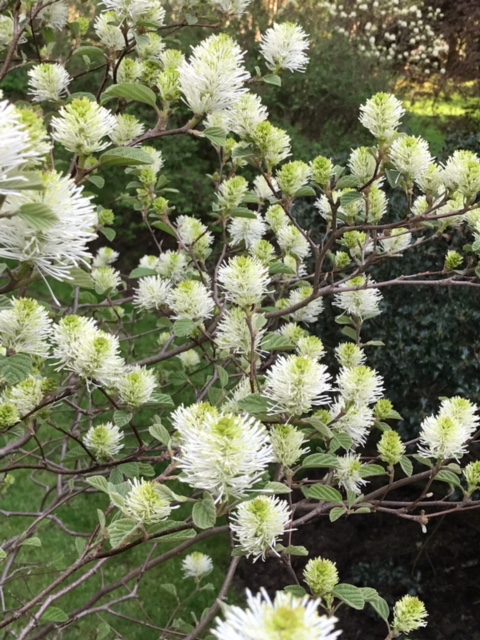
Dwarf Fothergilla, on the other hand, is a gorgeous native shrub with three seasons of interest. It blooms in early spring, and unlike forsythia, its flowers are fragrant – they smell like honey! And they attract and nourish pollinators.

Spring flowers on Fothergilla

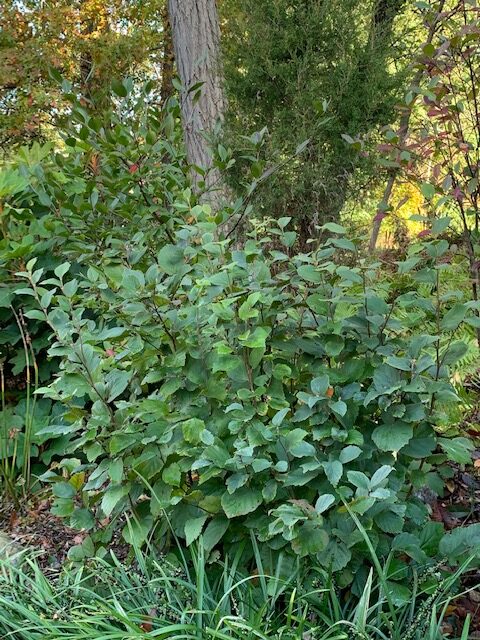
All summer long, Fothergilla catches the eye with pretty bluish-green, rounded leaves. It can be used as a hedge, but rarely needs trimming. It tops out around 4 feet and naturally maintains a rounded shape. It is not vulnerable to disease and needs no regular maintenance. It may need supplemental water in periods of drought, but it does not need fertilizer.

Fothergilla’s blue-green leaves contrast with other summer greens
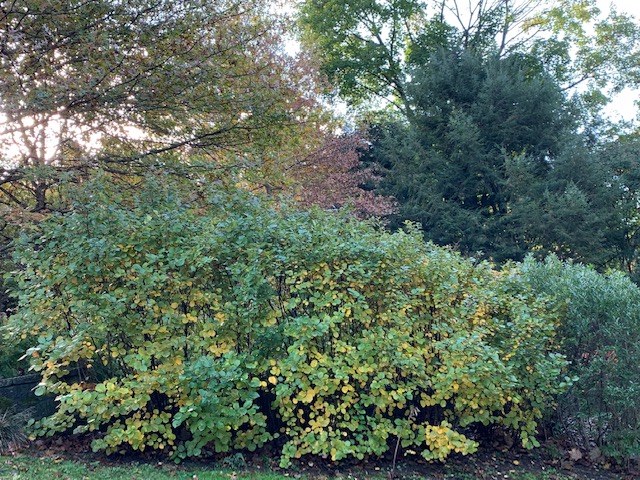
A hedge of Fothergilla just starting to turn in Autumn

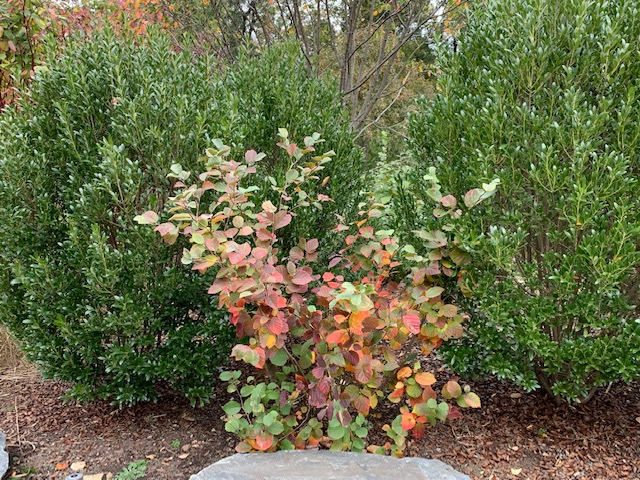
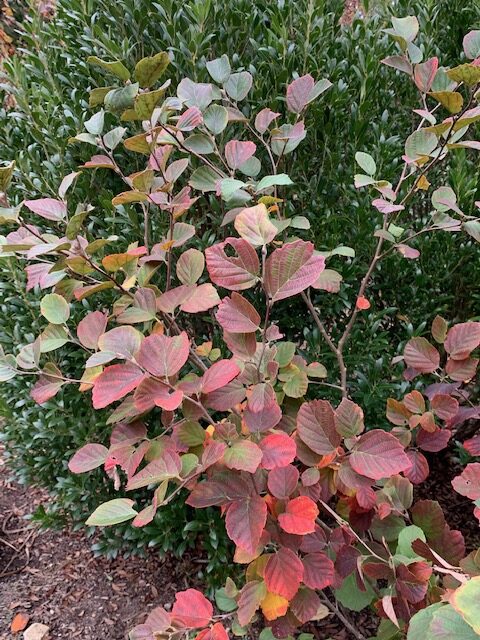
In fall, Fothergilla is nothing short of spectacular, especially if it is planted in full sun. To really show it off, you can plant it in front of evergreens.  At the Nature Center, we have it in front of the native Inkberry (Ilex glabra), where it stands out as a specimen shrub in all three seasons. You can find it on the patio in front of the Manor House at the top of the stairs.

Fothergilla gardenii in Autumn at the Nature Center
Actually, it’s hard to miss!
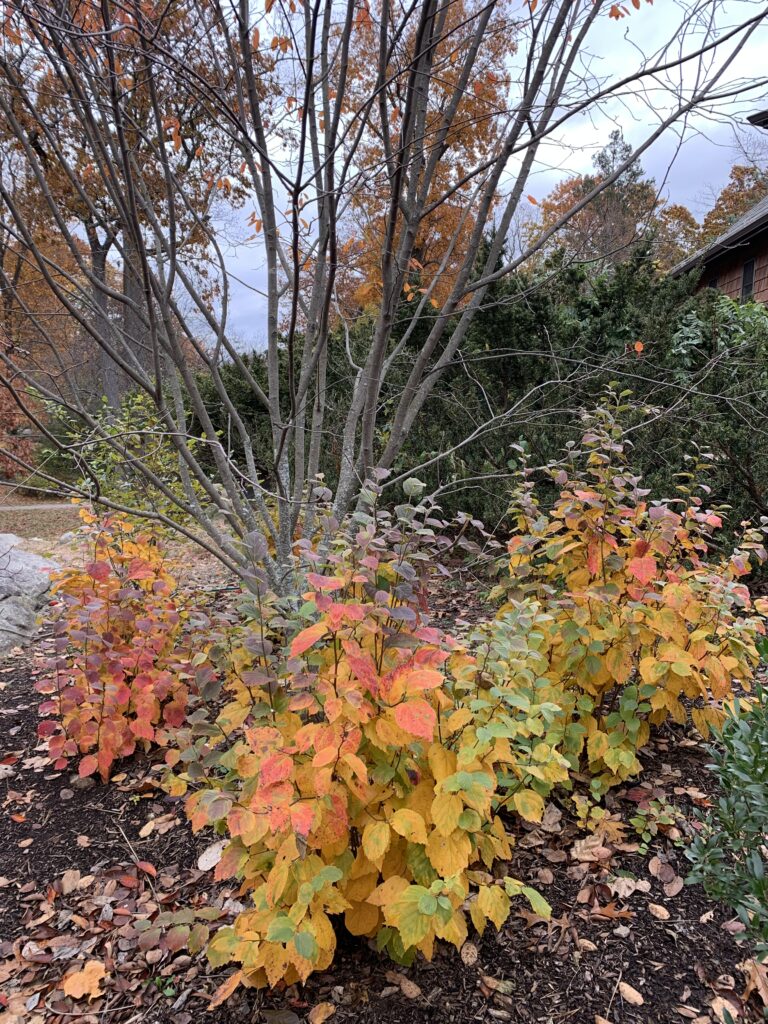
Not boring! Try this beautiful native shrub!

Check back next week to learn about other “not-boring” native shrubs!

This blog is authored weekly by Cathy Ludden, local expert and advocate for native plants; and Board Member, Greenburgh Nature Center. Follow Cathy on Instagram for more photos and gardening tips @cathyludden.
A Tale of Two Dogwoods

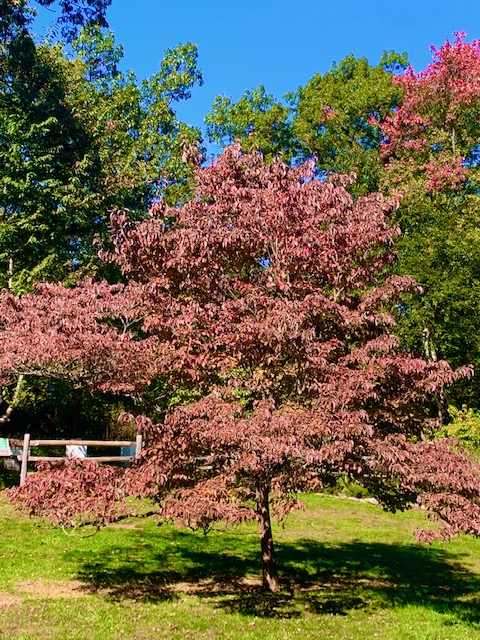
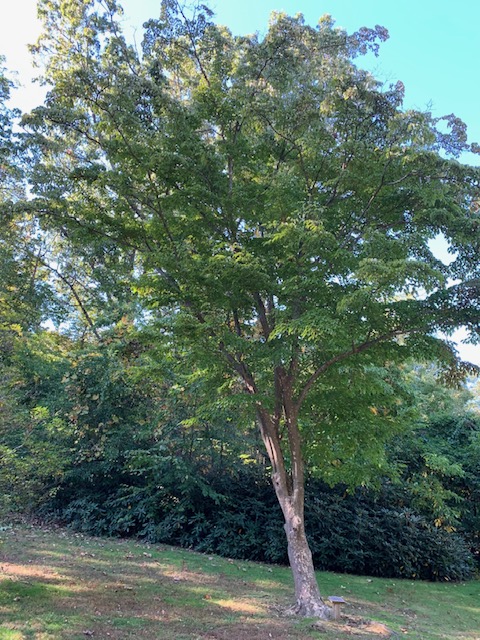
In front of the Manor House at the Nature Center, there are two species of dogwood trees. One is the native Flowering Dogwood (Cornus florida), and the other is the non-native Korean or Japanese dogwood (Cornus kousa). Particularly at this time of year, the critical benefits of the native tree become obvious.

Native Flowering Dogwood at the Nature Center
Non-native Kousa dogwood on the Great Lawn
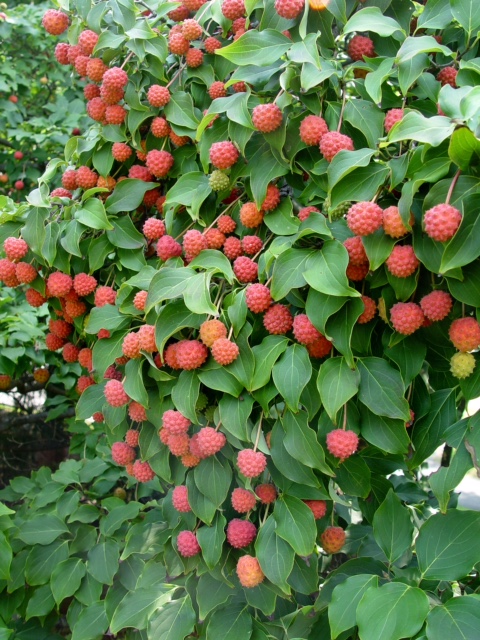
Kousa berries in August

Plant species evolved together with animal species living in the same habitat. Flowering Dogwood evolved here, in Eastern North America, along with the insects, birds, and mammals native to our forests. Kousa dogwood evolved in Asia with the animals native there – very different animals.

Both species of dogwood have beautiful spring flowers, but the native Flowering Dogwood blooms weeks earlier – just as local pollinators emerge looking for nectar and pollen. Kousa dogwood blooms much later in the spring. By then, lots of other flowers have emerged and the need for early-season nectar and pollen is less crucial.

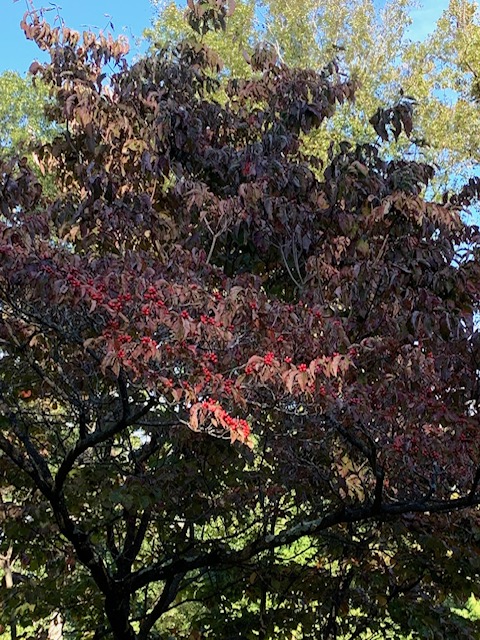
By the end of the season, the timing of these two species is reversed. Kousa dogwood produces its showy red berries early — in August. The berries of the Flowering Dogwood, on the other hand, start to ripen in October — just as songbirds need them to fuel their migration.

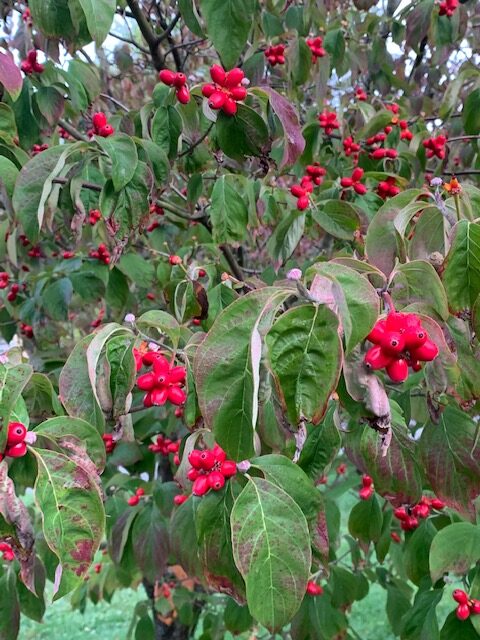
Flowering Dogwood berries in October

In Asia, Kousa berries are eaten by monkeys and other indigenous wildlife. Here, those berries are largely ignored. The berries are too big for songbirds. Squirrels and chipmunks aren’t interested either. Instead, Kousa berries end up where they fall, mashed by foot traffic and lawnmowers.

Kousa berries are not useful to wildlife and make a mess

The berries of the Flowering Dogwood are an essential food source for migrating songbirds because they are full of nutritious fats and proteins. We have seen flocks of migrating birds descend on a Flowering Dogwood and clean it out of berries in a few days. Any berries that do hit the ground are quickly carried off by squirrels and chipmunks.

Native Flowering Dogwood berries in October
Berry buffet for birds at the Nature Center

Nurseries and garden magazines may tell you that Kousa dogwood is a better choice for home landscapes than native dogwood because the Asian variety is more resistant to disease. The disease in question is anthracnose, a fungus that first appeared in the US in the 1970’s and quickly became lethal to native dogwoods. Research strongly suggests that the fungus actually was introduced to the US by importation of the Asian dogwood. Kousa dogwoods are more resistant to the fungus because they co-evolved with it and developed resistance over time. American dogwoods did not have that opportunity. The arrival of the fungus here was a near-disaster for this iconic American tree.

Fortunately, growers immediately began developing resistant varieties of Flowering Dogwood. “Appalachian Spring” was one of the first varieties to successfully fend off the disease. Other disease-resistant varieties are readily available now. “Cherokee Brave” and “Cherokee Chief” have pink flowers, while “Cherokee Princess” blooms in white. These trees do very well in our area. They prefer sun or part shade in well-drained soil, and benefit from organic fertilizer or compost. In periods of drought, they will need supplemental water. They never get too tall, and they make spectacular lawn trees.

“Cherokee Brave” flowering in Greenburgh in the spring

If you’re looking for an ornamental tree with gorgeous spring flowers, great fall color, and an important role to play in the local ecology, skip the non-natives. You really can’t do better than Cornus florida, our own Flowering Dogwood.

This blog is authored weekly by Cathy Ludden, local expert and advocate for native plants and Board Member, Greenburgh Nature Center.

Be Still, My Bleeding Heart!

We have a new love at the Nature Center.  

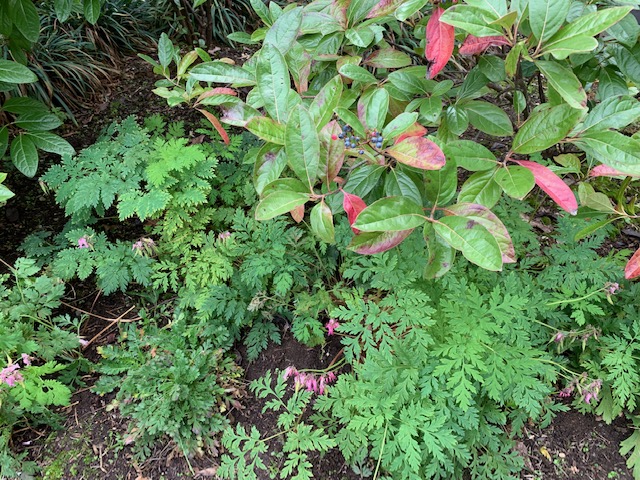
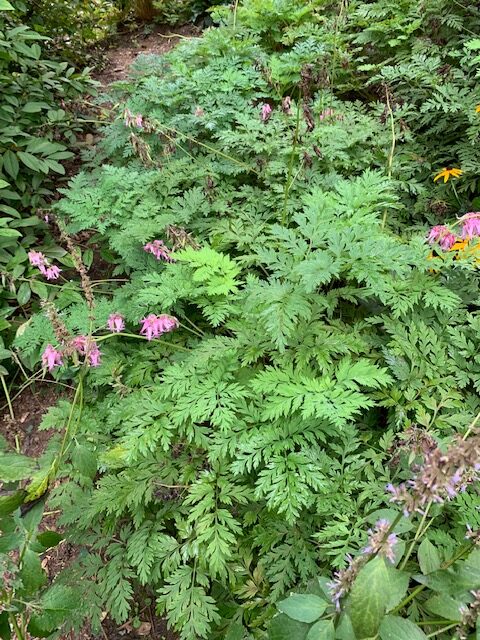
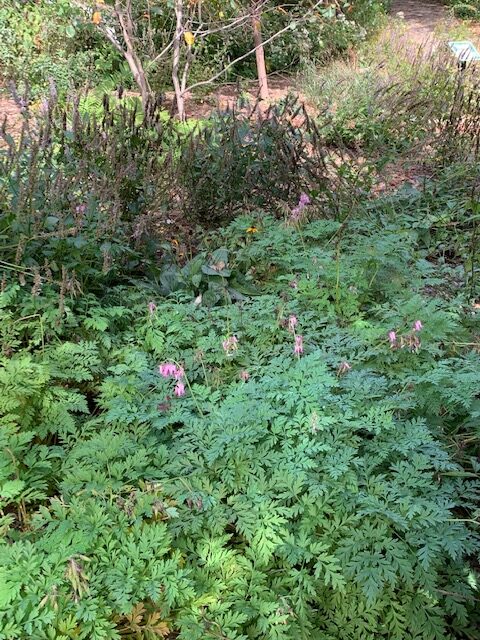
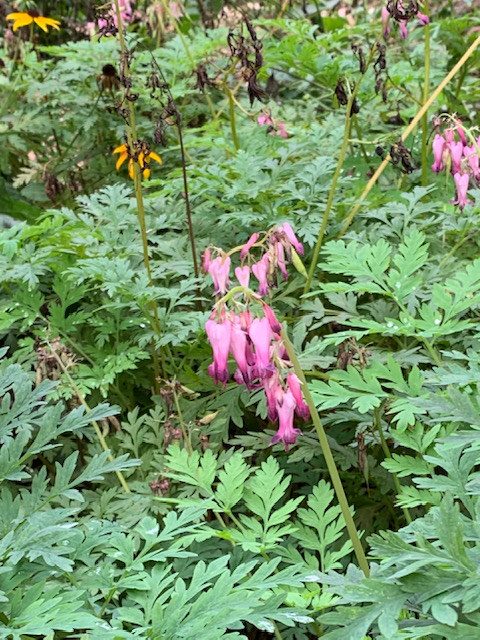
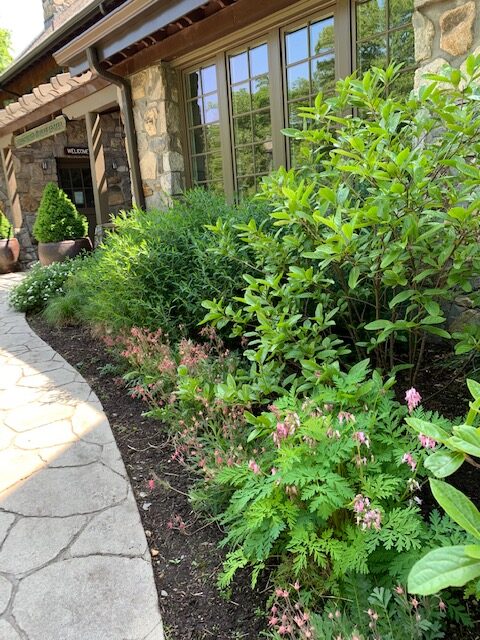
Dicentra eximia, a native plant commonly called Fringed Bleeding Heart, started blooming here in May and continued blooming right through Halloween! It has lacy, soft green foliage that stays fresh from early spring through pumpkin time. Its flowers are little red and pink hearts with a “droplet” at the tip. Bees love them, and now, so do we.

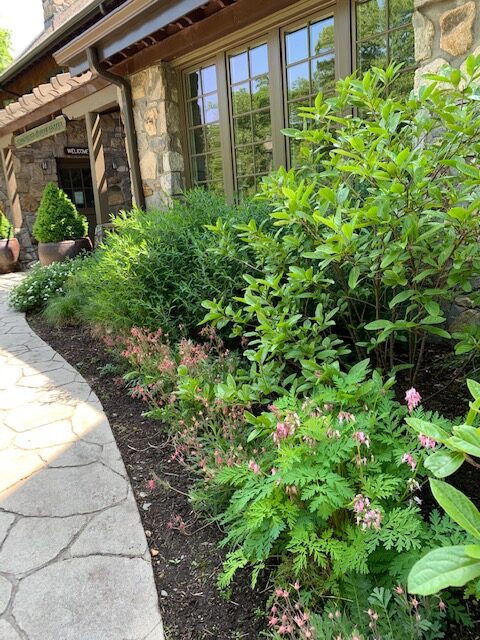
Fringed Bleeding Heart (foreground) blooming in May with Prairie Smoke
The same spot in September
Still fresh in October, as autumn leaves start to turn

We planted Fringed Bleeding Heart two years ago in front of the Manor House, mostly to fill in until our new shrubs got big enough to occupy the space. The soil there is not rich at all, and the building faces west. Though the overhanging eves protect the flower bed from full sun at mid-day, it is definitely not a shady area. You could think this was a questionable planting decision, since most sources say that Dicentra eximia needs rich, moist, fertile soil, and part or full shade.

We are starting to suspect that this advice comes from gardeners more familiar with the non-native bleeding heart (Laprocapnos or Dicentra spectabilis), an old garden favorite that originated in Asia. That plant definitely wants rich soil, steady moisture, and shade. It has lovely flowers, but it also goes dormant after blooming and disappears completely by late spring.

Fringed Bleeding Heart, on the other hand, originated in the Appalachian Mountains where the soil is often rocky and dries out between rainfalls. Though it can be found on shady forest floors where the soil is rich and moist, it also grows on rocky ledges with thin soil and more sun. We are starting to think this plant is tougher than most gardeners believe.

We are testing that theory by including a big patch of Dicentra eximia in the new Pollinator Garden we planted last June. Most of the other plants in that garden are tough, sun-loving, drought-tolerant perennials and grasses. But right there, in the slim shadow of a small Redbud tree, we included Fringed Bleeding Heart. The soil is poor and dry, for the most part – exactly what the other pollinator-friendly plants prefer. The Fringed Bleeding Heart gets a bit of shade from the tree, but is otherwise exposed. 

And this is how it’s done so far:

Fringed Bleeding Heart in the Pollinator Garden in July with Anise Hyssop
Still lush in mid-September
Fringed Bleeding Heart still blooming in October!

A native plant that literally blooms its little hearts out for you all season long?
Oh yes, we’re definitely in love!

This blog is authored weekly by Cathy Ludden, local expert and advocate for native plants and Board Member, Greenburgh Nature Center. Follow Cathy on Instagram for more photos and gardening tips.